








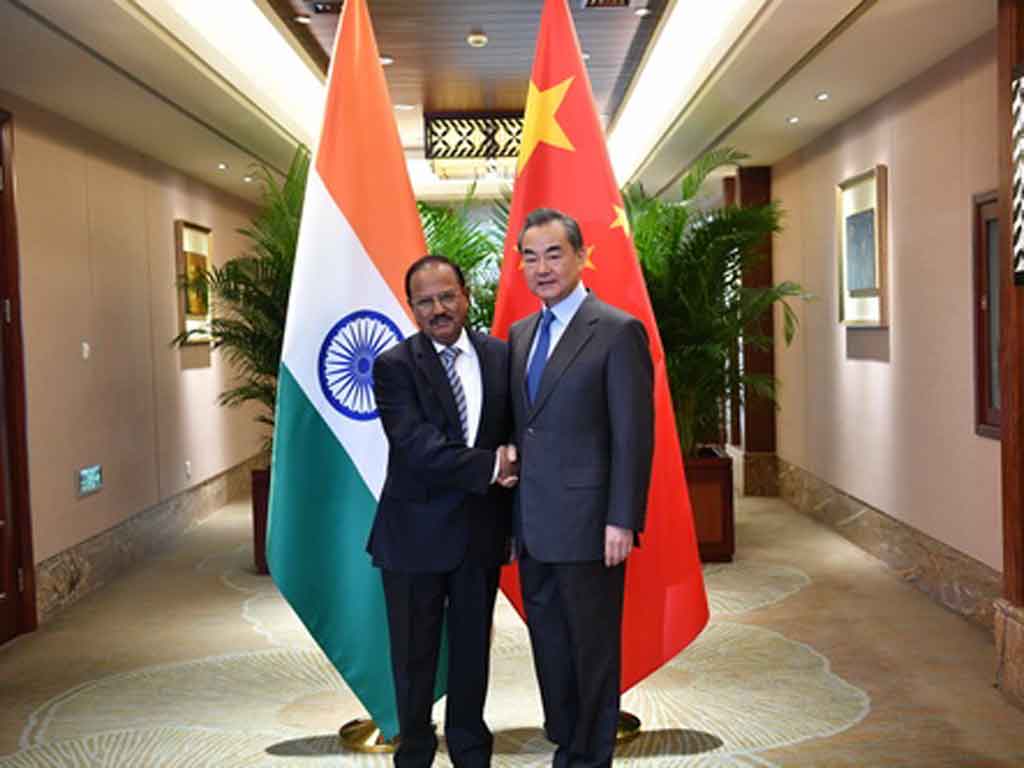
This meeting is crucial, as it aims at maintaining peace and tranquility in the border territories, which is seen as the basis for any positive momentum in bilateral relations.
Wang will also be received by Prime Minister Narendra Modi, according to his agenda in New Delhi.
In his first activity in this capital on Monday, the Chinese foreign minister held talks with his counterpart, Subrahmanyam Jaishankar, on economic and trade issues, pilgrimages, people-to-people contacts, river data exchange, border trade, connectivity, and bilateral exchanges, which the Indian foreign minister himself described as productive.
In his speech before the meeting, Jaishankar emphasized that both nations agree on seeking a just, balanced, and multipolar world order, and this interest also includes the desire to achieve a multipolar Asia.
Regarding the ties between the two countries, the Indian diplomat stressed that after a complex period, the world’s two largest nations are now seeking to move forward and expressed his hope that the current talks will contribute to building stable ties based on cooperation and with a vision for the future.
The Indian foreign minister also highlighted the importance of this Tuesday’s meeting in normalizing ties between the two countries and, in this regard, noted the essential progress of the de-escalation process.
Finally, Jaishankar emphasized the relevance of Wang’s current visit to India, shortly before the Shanghai Cooperation Organization (SCO) Summit in Tianjin, China.
abo/iff/lam/lrd