








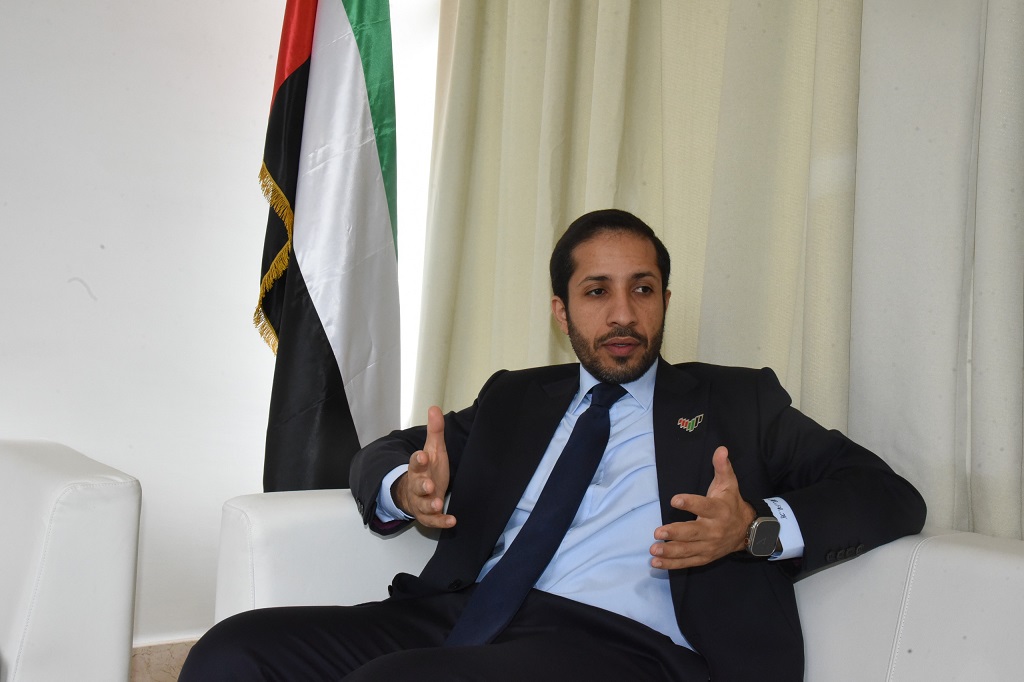
About the significance of this date, Prensa Latina had the opportunity to talk with the ambassador of the United Arab Emirates to Cuba, Hazza Alkaabi, who highlighted that practicing human fraternity implies embracing cultural diversity, promoting empathy and actively participating in the dialogue to bridge differences and establish links.
“In a world fighting against the rise of religious and cultural intolerance, the celebration of dates such as the Day of Human Fraternity is crucial, serving as a reminder to promote harmony, understanding and cooperation between diverse origins, fostering a more inclusive and tolerant global community,” he stressed.
For the UAE, he commented, the celebration has a special meaning, while symbolizing the country’s commitment to promoting tolerance, coexistence and understanding between people of different faiths and cultures, aligning with its vision of a harmonious and inclusive society.
Celebrations in the arab country usually include interreligious dialogues, cultural events and educational programs; initiatives that aim to promote understanding, respect and collaboration between people of diverse religions and backgrounds, fostering a sense of unity and shared humanity.
“Here in Cuba we are planning to organize the first interreligious Iftar during the holy month of Ramadan, we will bring together people of different faiths at the same table for the first time here,” the diplomat explained.
Human Fraternity Day was proclaimed on December 21, 2020 by the United Nations General Assembly, inspired by the global reaction to the historic signing of the Document on Human Fraternity by Pope Francis and the Grand Imam of Al -Azhar Ahmed Al-Tayeb, in Abu Dhabi, United Arab Emirates, on February 4, 2019.
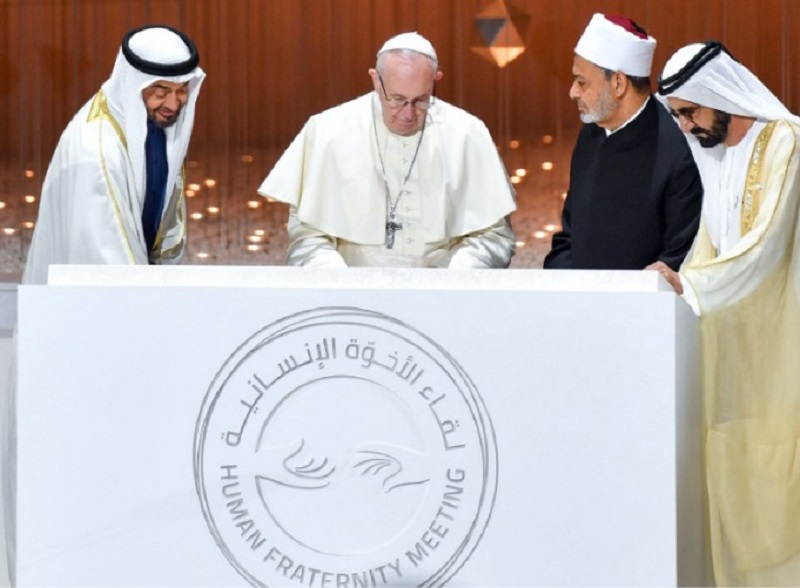
When asked why this milestone was held precisely in the UAE, the representative of that country in Cuba stressed “that being the beacon of tolerance, peace and multiculturalism and for its demonstrated efforts to promote acceptance and understanding as capital values, since its foundation the United Arab Emirates was chosen to host this historic event”.
He recalled the recognition expressed by UN Secretary-General António Guterres to Sheikh Mohamed bin Zayed Al Nahyan, Crown Prince of Abu Dhabi, for his fundamental efforts and support to achieve the signing and implementation of the Document.
In the opinion of the emirati ambassador, the text has opened new horizons by emphasizing common values and shared humanity above religious divisions.
The document promotes dialogue, tolerance and cooperation, inspiring global initiatives to bridge cultural and religious differences for the sake of a more inclusive and harmonious world, he said.
Following the signing of the document by two of the world’s great religious leaders, the Higher Committee of Human Fraternity (HCHF) was established as an independent international commission established to promote and fulfill the aspirations of the text.
The HCHF oversees many key initiatives, through which it seeks to embody the principles of human brotherhood and present them as vivid practical examples.
Alkaabi told Prensa Latina that HCHF programs for youth bring together people from different countries, cultures and beliefs, as well as help them put into practice the principles of human fraternity in their communities and societies.
“The program focuses on areas of work that represent the greatest global opportunities for young people to enhance inclusion, solidarity and human fraternity, by developing their capacity to critically analyze issues, act and participate in order to foster fraternity by designing lasting solutions to maintain this transformation,” he explained.
Likewise, he added that the initiatives for women promoted by the Higher Committee of Human Fraternity raise awareness about the challenges that women face in our current world and explore solutions to support them both locally and internationally.
AN AWARD THAT HONORS THE HUMAN FRATERNITY
The Zayed Award for Human Fraternity honors individuals, organizations and other entities committed to work that makes a profound contribution to human fraternity in all parts of the world.
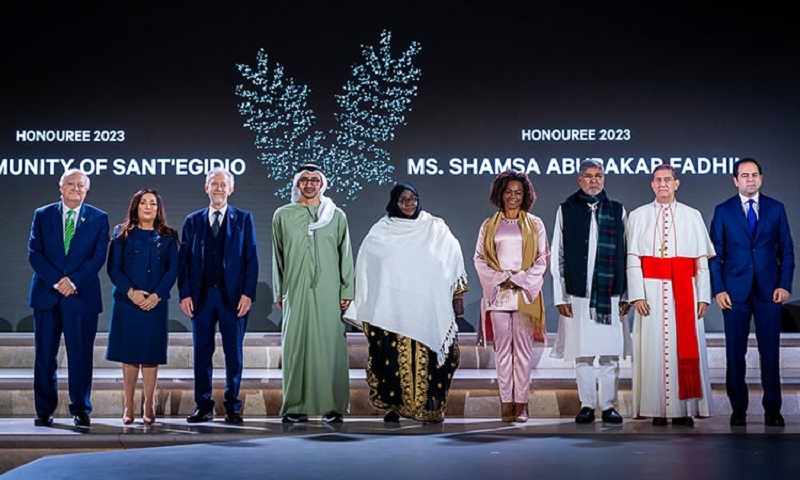
Alkaabi explained that the recognition is an independent global award, granted by the HCHF every February 4 and endowed with a million dollars, wich is presented during a ceremony held in Abu Dhabi, United Arab Emirates.
Laureates of the Zayed Prize are chosen by an independent committee, appointed annually by the Higher Committee of Human Fraternity, composed of experts and famous public service personalities from around the world, people who are imbued with wisdom and deeply committed to the cause of peaceful coexistence, he continued.
He detailed that, every year, the award will be decided by: one person selected by the Grand Imam of Al-Azhar, one by the Pope of the Catholic Church, one by the Secretary General of the United Nations, as well as two members selected by the HCHF, and its secretary general, among world personalities recognized for their efforts in favor of tolerance and peace.
Pope Francis and Grand Imam Al-Tayeb were the first to receive the Zayed Prize for Human Fraternity.
THE HOUSE OF THE ABRAHAMIC FAMILY
The Abrahamic Family House, the first interfaith complex of its kind in Abu Dhabi, was born after the signing of the Document on Human Fraternity by Pope Francis and Grand Imam Ahmed Al-Tayeb in February 2019.
For the diplomat, the location represents a beacon of mutual understanding, harmonious coexistence and peace between people of faith and goodwill.
The House consists of a mosque, church, synagogue and educational center on Saadiyat Island, the cultural heart of Abu Dhabi.

Through its design, it captures the shared values between Judaism, Christianity and Islam, and serves as a powerful platform to inspire and nurture understanding and acceptance among people of good will, he specified. According to the ambassador, the complex is a place of learning, dialogue and worship, open to all and a true reflection of the UAE’s belief in tolerance and hospitality.
mks