








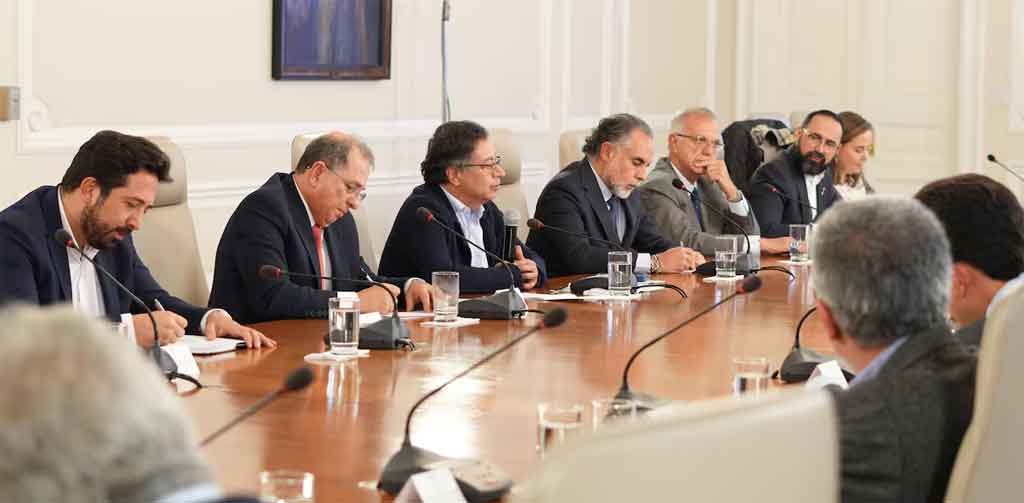
The Minister of the Interior, Juan Fernando Cristo, claimed that his resignation does not respond to the request of the president, but rather that he wants to “participate freely in the following electoral processes.”
He took the opportunity to thank the president for the opportunity to be part of a government with a liberal and reformist spirit.
Two other ministers who irrevocably resigned were the Minister of Labor, Gloria Inés Ramírez, and the Minister of Environment, Susana Muhammad, who were two of the few ministers who remained in their positions since Petro came to power in 2022.
The first reaffirmed her will to continue working for a more just and increasingly democratic Colombia, understanding that politics must move without sectarianism and without ambiguity.
The second, for her part, assured that her resignation, which was announced before the president made the request to his cabinet, is not protocolary, but motivated.
On the other hand, Chancellor Laura Sarabia; the Minister of Mines, Andrés Camacho; the Minister of Justice, Ángela María Buitrago; and the Minister of Education, Daniel Rojas, did present their protocolary resignation.
The difference between irrevocable and formal resignation is that in the latter modality, the incumbents agree to Petro’s request to abdicate, but could still be kept in office by the ruler.
Last night, the head of state asked all members of his cabinet to submit their positions to the Presidency for consideration.
“I have requested formal resignation from ministers and directors of administrative departments. There will be some changes in the cabinet to achieve greater compliance with the program ordered by the people. The government will concentrate completely on the fulfillment of the program,” wrote the ruler on his social network X.
Petro’s request occurs a few days after holding a Council of Ministers, televised live to the entire country, which became a self-critical exercise where he reported that, of 195 commitments made to the citizens during his administration, 146 have been achieved, or 75 percent.
He stressed to his cabinet the need to accelerate works in the areas of transportation, roads, housing, education, foreign relations and trade, among other sectors.
He later wrote on his social networks that in the remaining time of his mandate (18 months), he wants a united and transparent government facing the people and with the people.
ef/ro/ifs