







The statement indicates that although the country has a comprehensive legal framework, including ILO Convention 169, the actual implementation of these rights ‘is not evident’ in the most complex scenarios of relationship between these communities and the State.
The trade union, farmers, indigenous and human rights groups hope that the review carried out by the ILO Commission of Experts on the Application of Conventions and Recommendations to the Ecuadorian State will become an opportunity to strengthen rather than weaken collective rights.
The document recalls that Convention 169 aims to transform the historical relationship between States and indigenous peoples, overcoming assimilation policies and establishing links based on substantive equality.
However, the organizations maintain that rights have been systematically violated in Ecuador.
They claim that in recent times the State has arbitrarily restricted the scope of prior consultation, authorized extractive projects, mining, oil, hydropower and agro-industries without adequate consultation processes and has adopted laws that directly affect these peoples.
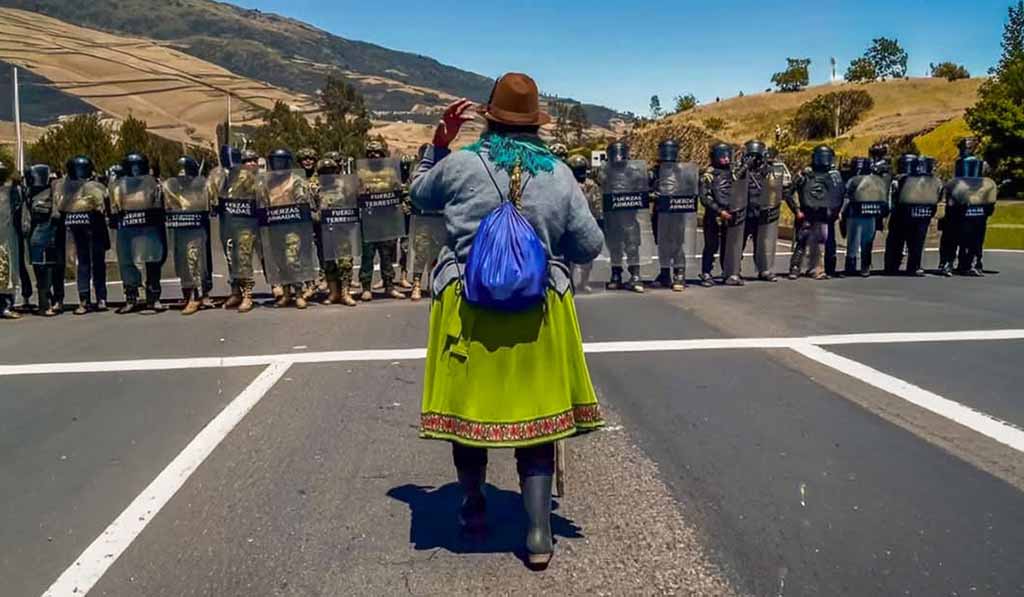
The statement recalls that this deterioration occurs in a tense political context, with a national strike of one month against economic and security measures of President Daniel Noboa and a state response marked by police and judicial repression against social leaders.
The statement added that on November 16, Ecuadorians rejected in popular consultation Noboa’s proposal to convene a constituent assembly to draft a new constitution.
abo/mem/avr