







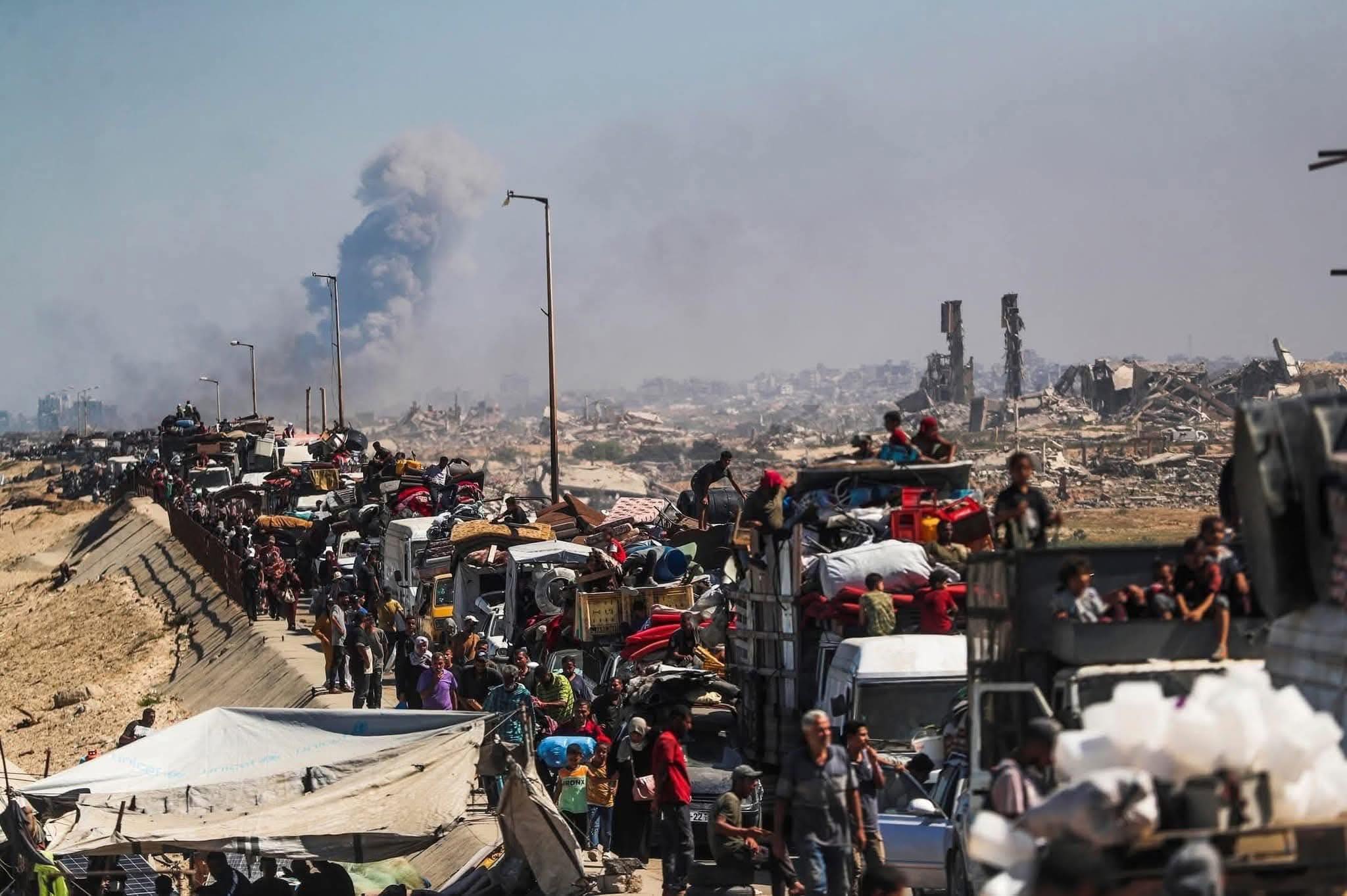
The Nakba, meaning “catastrophe” in Arabic, refers to the events of May 15, 1948, when the State of Israel was proclaimed following a conflict that resulted in the mass exodus of Palestinians from cities, towns, and villages of historic Palestine.
As every year, the commemorations included marches, rallies, and cultural activities in the West Bank, Gaza Strip, refugee camps, and Palestinian communities abroad, with demands focused on the right of return for Palestinian refugees.
This year’s events were held under the slogan “We will not leave… Our roots are deeper than your destruction” and were marked by the context of the Israeli offensive in Gaza and the increase in military operations in the West Bank.
In Ramallah, in the heart of the occupied West Bank, hundreds of people participated in a march and rally, displaying Palestinian flags, black banners, and symbolic keys representing the refugees’ right of return.
Demonstrations also took place in Palestinian refugee camps in several Arab countries and other regions of the world. Participants carried banners with the names of Palestinian towns and villages depopulated in 1948 and expressed their rejection of any further forced displacement.
jdt/jav/mem/fm