







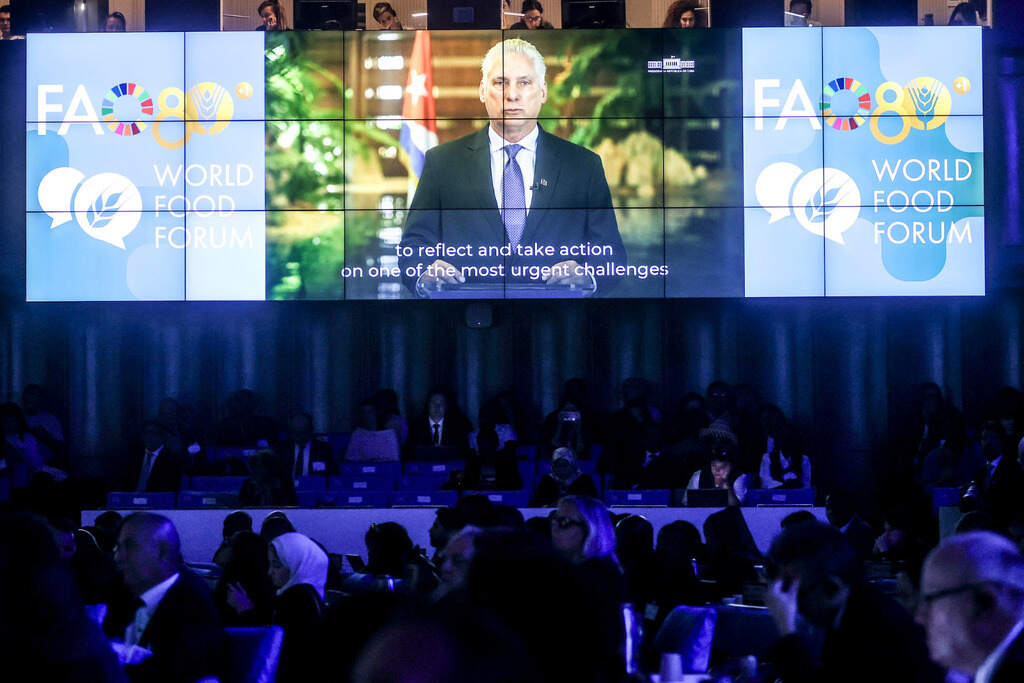
During the opening of the event, held in Rome, he stated in a video message that Cuba’s food-related difficulties stem not only from environmental factors or market dynamics but also from more than six decades of economic, commercial, and financial blockade.
He further warned that “armed conflicts, the climate crisis, and economic turmoil disproportionately affect developing countries, where more than 640 million people suffer from extreme hunger.”
The leader also noted that these restrictions limit the island’s access to international markets, financing, technology, agricultural inputs, and fuel, and he criticized the intensification of measures adopted by the Trump administration starting in early 2016.
Faced with these adversities, the Cuban government has chosen to reduce reliance on external inputs and improve the response capacity of its agrifood system.
Diaz-Canel expressed gratitude for the FAO’s cooperation, noting that the organization has mobilized nearly $100 million in resources, technical assistance, and training for Cuba’s productive sectors.
He also announced the country’s “joining of the Global Alliance against Hunger and Poverty, with two plans aimed at protecting the most vulnerable sectors.”
jdt/rc/bbb