







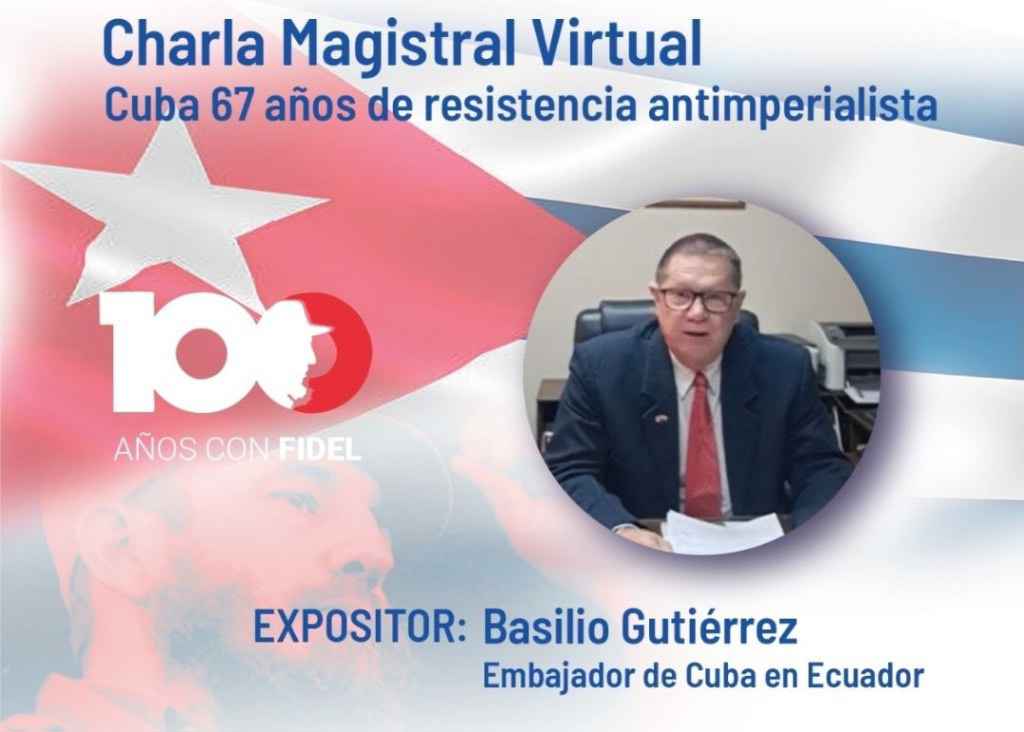
However, he pointed out that after the revolutionary triumph of 1959 led by Fidel Castro, the dispute deepened due to the Caribbean nation’s decision to fully exercise its right to be free, sovereign, and independent.
The ambassador affirmed that, despite more than six decades of sanctions and pressure, the Revolution has gone through different stages, including the implementation of profound social transformations in its early years, subsequent economic diversification, and overcoming the so-called Special Period after the collapse of the Soviet Union. Nevertheless, Gutierrez asserted that the country has strengths such as national unity, a planned economy, and international alliances, in addition to historical relations with the peoples of Latin America, the Caribbean, and the United States.
“The blockade is the main obstacle to Cuba’s development and exacerbates internal errors and weaknesses, but it has not managed to derail the country,” the Cuban government representative explained to those who connected via Zoom and social media.
He also reiterated that Cuba is willing to maintain a constructive dialogue with the United States, based on mutual respect and sovereign equality, and called on the international community to contribute to the dissemination of truthful information about the Cuban reality and to strengthen ties of cooperation and solidarity.
jdt/jha/avr