








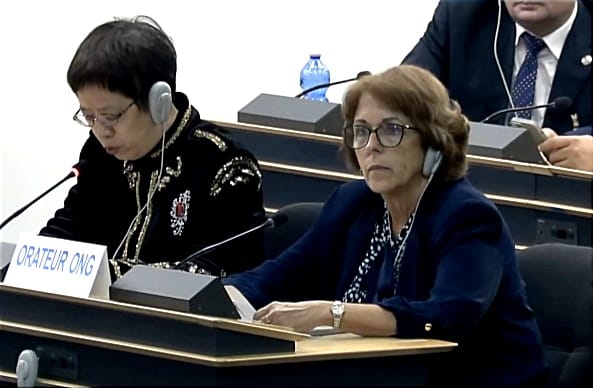
Speaking at the 60th session of that organization, based in Geneva, Switzerland, the Cuban musicologist emphasized that the Washington government’s siege against Cuba has intensified in recent years, negatively impacting all areas of the country’s cultural life, UNEAC reported in a press release.
In her speech, the president of the organization that brings together the intellectual and artistic vanguard in Cuba warned of the concrete consequences of this hostile policy, which not only directly affects creators and artistic creation, but also jeopardizes the sustainability of the Cuban education system, characterized by its universal and free access.
Despite these challenges, Bonet asserted that Cuba maintains a solid network of cultural institutions, a legal framework for the protection of heritage, and mechanisms for state support for cultural production, including subsidized prices that allow widespread access to artistic expression.
She emphasized that these achievements are tangible proof that the democratization of cultural life is an unavoidable achievement of the Cuban people, the statement said.
“Our cultural offerings are inclusive and do not establish differences based on sex, race, or age, religious beliefs, or abilities,” she stated. In this regard, she emphasized that the right to participate in cultural life—whether as an audience or as a creator—is a guiding principle of the nation’s cultural policy.
The president of UNEAC defended the role of culture as an essential component of spiritual life and the preservation of national identity.
jdt/ro/mml