








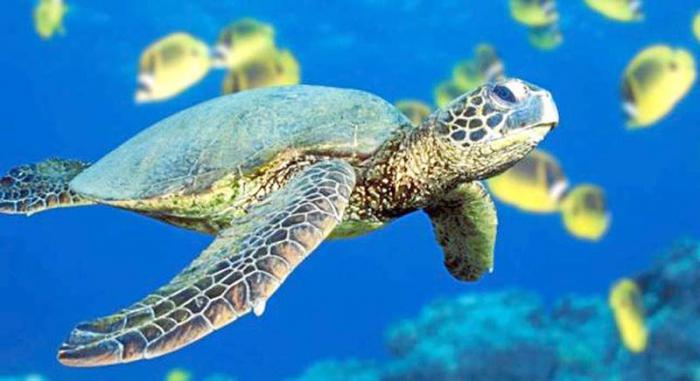
This year, around ten nesting events have been reported on different beaches in the area, which belongs to the protected area of the Cayo Coco Central-West Ecological Reserve. This is unusual, as until now the turtle’s main nesting areas are in the south of the country.
Daylon Fundora, a specialist in Natural Resources, Prioritized Ecosystems, and Climate Change at the Science, Technology, and Environment Delegation in Ciego de Avila, indicated that they reported the birth of more than 100 hatchlings in a single nest, demonstrating an excellent reproductive season for the marine animal.
At all locations, appropriate safety measures were adopted to protect the areas where the eggs were laid, with the goal of increasing the hatchling survival rate.
The main nesting sites were at Las Coloradas, Larga, and Prohibida beaches, where nests of green, loggerhead, and hawksbill turtles were found.
Cuba is developing various actions for the conservation of marine species, including monitoring programs, research projects on the dangers they face, strengthening access restrictions to nesting areas, and properly demarcating and cleaning the spaces where the nests are located.
Evelyn Marichal, a biologist and researcher at the Center for Coastal Ecosystems, noted that female turtles often return to the same beach where they were born to lay their eggs, demonstrating loyalty to their place of origin.
rgh/nmt