








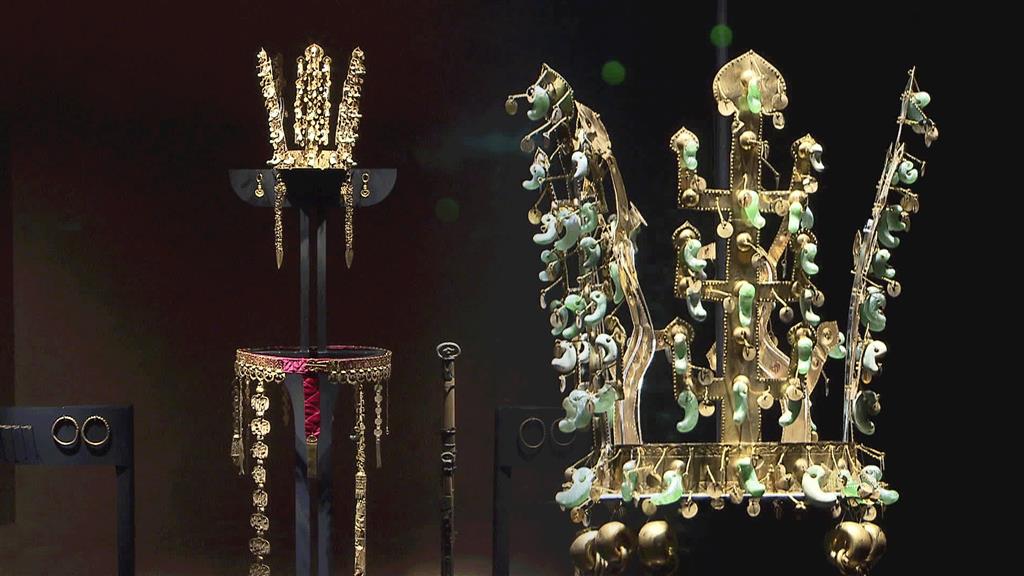
The exhibition, which opened on October 28, displays the six gold crowns found in the royal tombs of Geumgwanchong (1921), Geumnyeongchong (1924), Seobongchong (1926), Gyodonggobun (1972), Cheonmachong (1973), and in the northern mound of Hwangnamdaechong (1974).
This is the first time these symbols of the ancient Silla kingdom have been exhibited together, according to the government website Korea.net, although it is not known exactly which monarchs they belonged to.
The exhibition will run until December 14 in Gyeongju, a city with historical roots in the aforementioned kingdom, making it a place of great cultural and heritage value.
Along with Goguryeo and Baekje, Silla was one of the three kingdoms of ancient Korea (1st century BCE to 7th century CE) and the one that unified the territory in 668 CE. Under its rule, Korean culture and art are considered to have reached their golden age thanks to cultural exchange with China and the Middle East, explains the National Museum of World Cultures.
jdt/jav/mem/vnl