








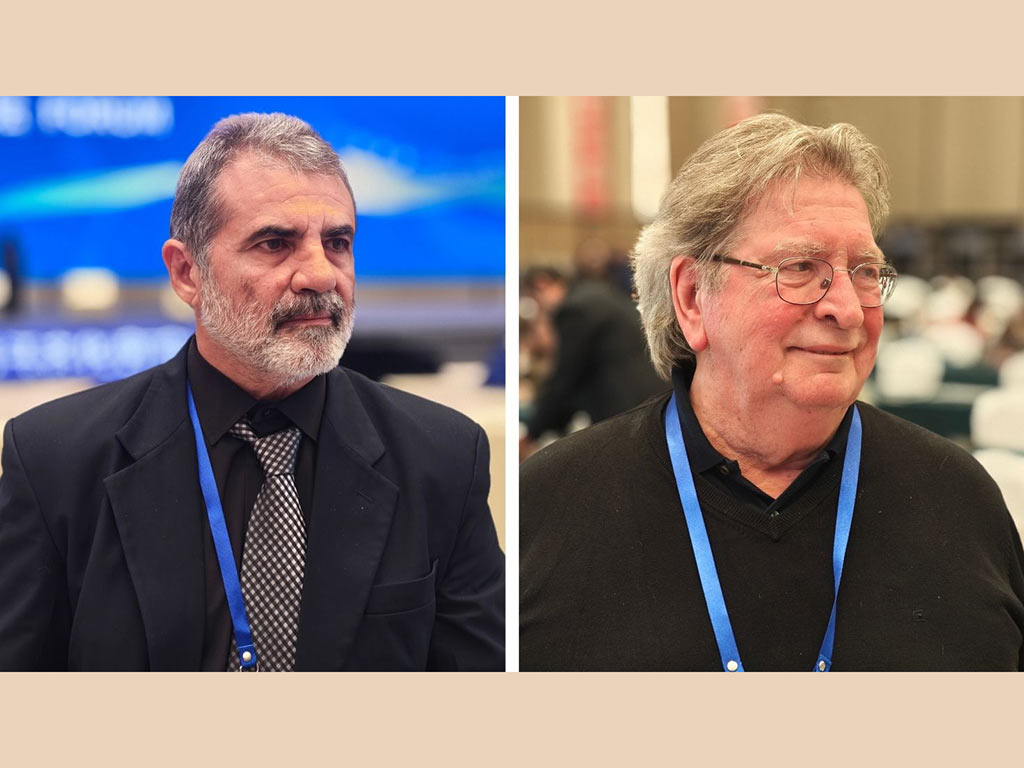
In statements to Prensa Latina, Cuban academician Eduardo Regalado pointed out that the main achievements of this megaproject in the Latin American region are linked to infrastructure development, connectivity, technology transfer, technical elements for environmental conservation, and the possibilities for cooperation in trade and investment between both parties.
Regalado noted that in a world where the inclusion of less developed countries is not considered, the BRI allows countries of the Global South, especially those in Latin America, access to an alternative for development, financing, technologies, and cooperation, without the dominant political conditions of other global financial mechanisms.
French academician Jean-Pierre, in turn, stated that the BRI has ceased to be a project and has become a concrete reality that drives a new international dynamic and represents an alternative to the capitalist system in crisis.
Jean-Pierre underscored that this project is consistent with the five proposals for global governance presented by Chinese President Xi Jinping and is based on principles such as non-intervention, respect for sovereignty, solidarity, and peace.
Both experts are participating, along with some 300 academicians from more than 30 countries, in the sub-forum “Belt and Road Initiative, Civilizational Dialogue,” which is taking place as part of the Yangtze River Culture Forum.
abo/iff/mem/idm