







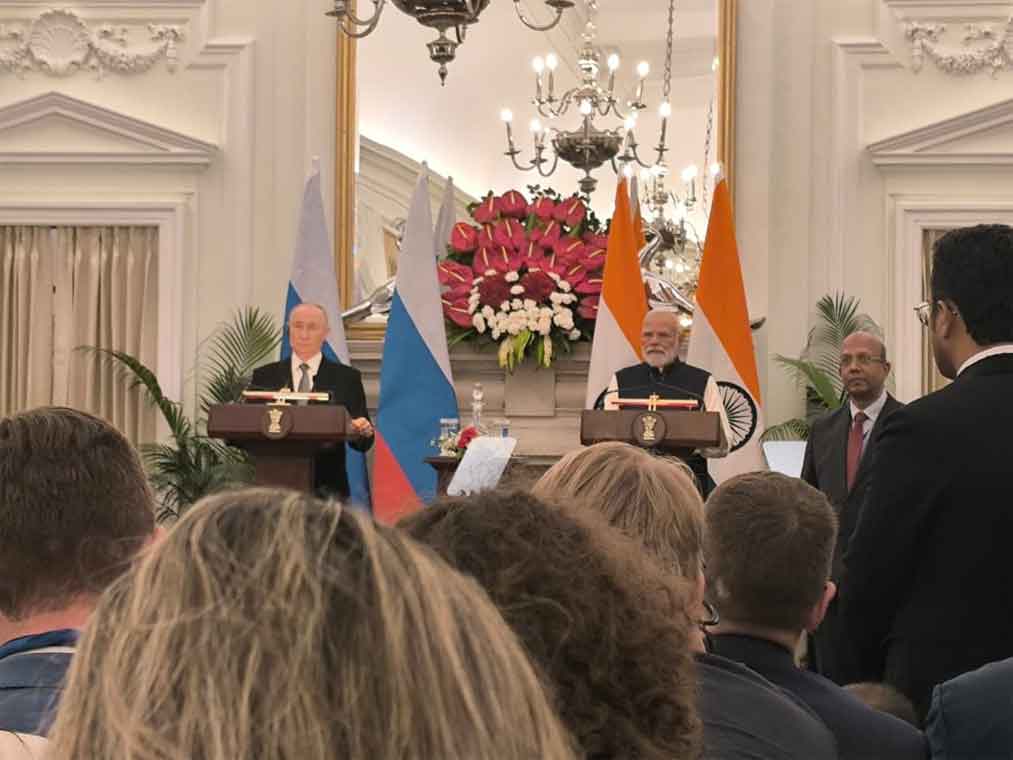
This mechanism is aimed at enhancing and expanding the strategic and privileged partnership that both nations maintain and responds to the objectives of achieving a bilateral trade volume of $ 100 billion for the next five years.
Before Putin and Modi, representatives of both nations exchanged 16 cooperation mechanisms in various sectors to, among others, regulate the mobility of skilled workers from India to Russia, combat irregular migration, and promote collaboration on health, medical education and science.
In addition, in the field of food safety, the training of Indian specialists in ships operating in polar waters and the creation of a regulatory framework for the development of a joint venture to manufacture urea in Russia by companies from the South Asian nation.
Similarly, India and Russia agreed to establish cooperation for the exchange of pre-arrival information on goods and vehicles between the two countries, as well as strengthening cross-border postal collaboration and supporting the growth of electronic commerce, especially for small and medium-sized enterprises.
They also exchanged mechanisms for scientific and academic exchange, training of students and professionals in the industrial sector and to enhance media cooperation, among other aspects.
abo/ro/lrd