







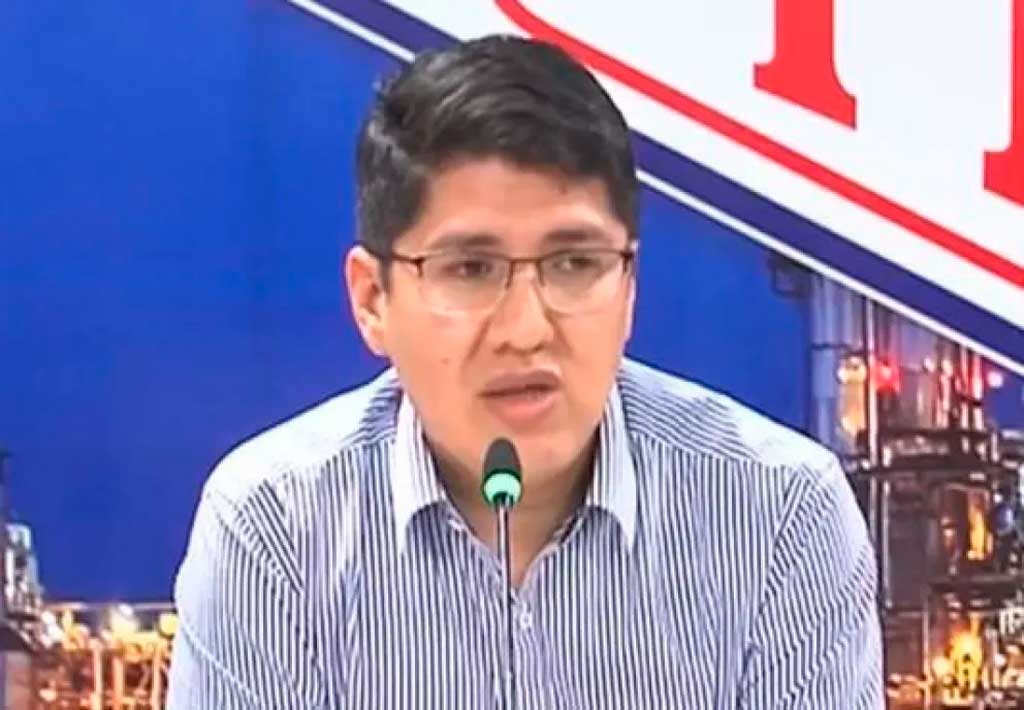
“By 2025, we have already seized more than 120,000 liters, 125 vehicles, and 107 people,” assured Germán Jiménez, director of the National Hydrocarbons Agency (ANH), in an interview with the state channel Bolivia TV. He reported that during 2025, eight gasoline and diesel service stations were intervened, along with one natural gas vehicle (NGV) station and 42 tankers.
The official described how those who commit this crime, stockpile fuel in jerrycans and then transport it hidden in mailboxes, vehicle grills, and double tanks.
On May 24th, President Luis Arce announced 11 measures and seven decrees to guarantee fuel and food for the population, under the motto of protecting the tables and pockets of Bolivian families.
Since then, the military has guarded service stations and reinforced its presence in border areas to combat reverse smuggling (the illegal transfer of fuel and food to neighboring countries, where they are sold at higher prices).
“All of these activities are now linked to the Armed Forces, National Customs, and Controlled Substances. The ANH has a greater presence at specific points where illicit activity could occur. We call these points risk or border areas,” said Jiménez, who reported that since last Friday, there have been controls at 21 strategic locations.
According to the ANH, between 2021 and 2024, more than 417 persons were arrested for illicit activities related to the illegal loading of fuel. “The 107 people (arrested this year) were referred to the Public Prosecutor’s Office; they must establish and justify these activities,” ANH specified.
The Bolivian Penal Code notes that the illegal storage, sale, and purchase of diesel, gasoline, and liquefied petroleum gas are crimes, and carry a prison sentence between three and six years.
jrr/llp/ro/jpm