








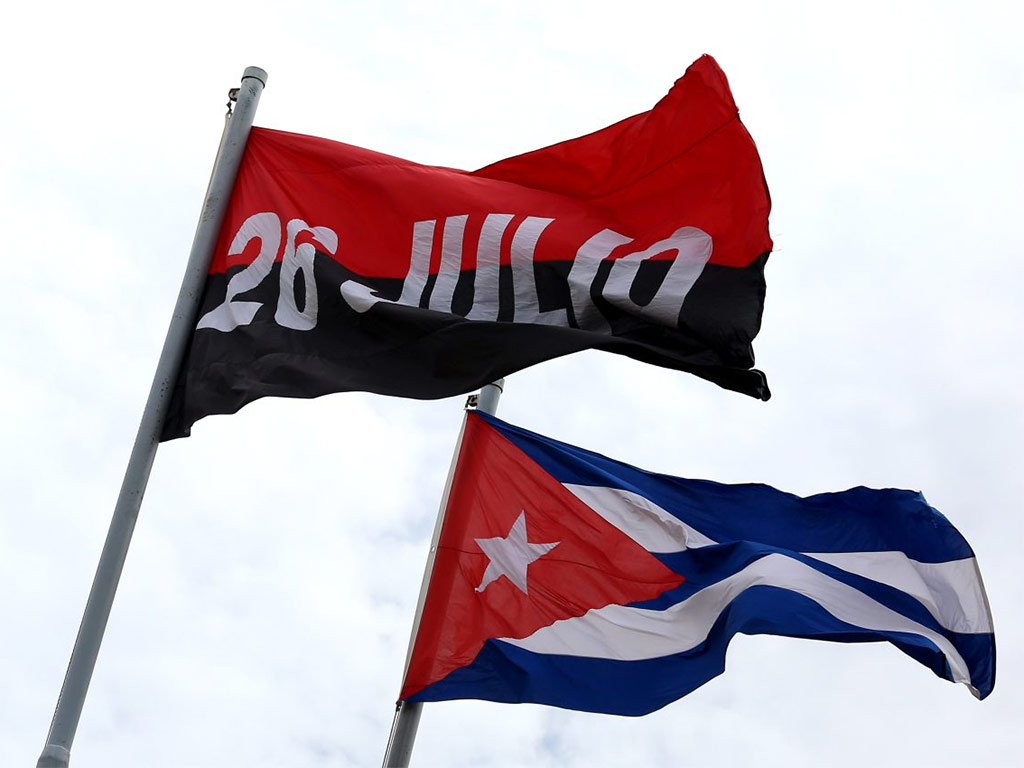
During these days, drives are taking place throughout the nation in honor of the national holiday, although the main event will take place this Saturday in the central province of Ciego de Avila.
The heroic action, which took place on July 26, 1953, had as its main objective to combat the evils of the dictatorship imposed on the island by Fulgencio Batista since the coup d’etat of March 10, 1952, and is considered the prelude to the struggles that led to the definitive triumph of the Cuban Revolution in January 1959.
Under the name of the Centennial Generation, in allusion to the 100th anniversary of the birth of Cuba’s National Hero, Jose Marti, in 1953, young revolutionaries led by the then-young lawyer Fidel Castro set out to promote an insurrectionary climate in the country, which would revive the Cuban people’s ideals of independence.
After the failure of the armed action, most of the participants were killed and those who survived were detained, but this unprecedented event awakened national consciousness and marked the beginning of the final stage of Cuba’s wars for independence.
The historic leader himself, Fidel Castro, expressed that the actions of July 26, 1953, constituted “a new path for the people; that it marked the beginning of a new conception of struggle, which in a not-so-distant time shattered the military dictatorship and created the conditions for the development of the Revolution.”
For this reason, this date in Cuba was baptized the “Day of National Rebellion,” and is celebrated annually to relive this epic feat and honor those who fell in that and subsequent struggles.
jdt/otf/mks