








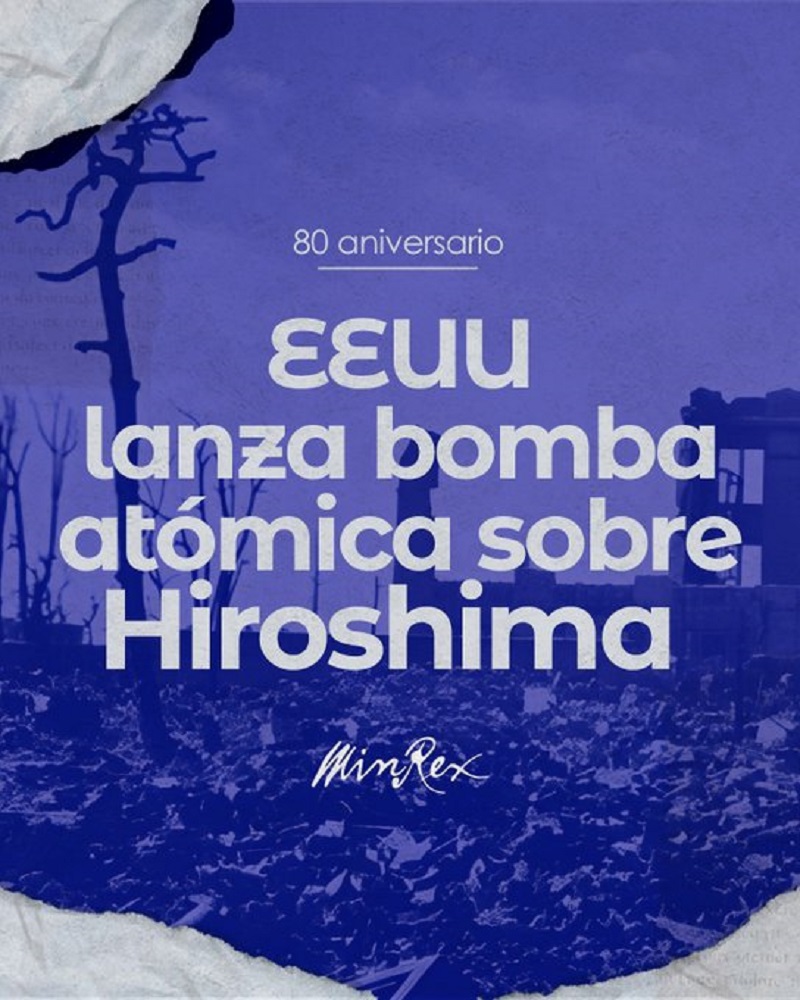
Through his account on the social network X, the Cuban Foreign Minister emphasized regarding that genocide: “It was the first time that humanity saw the serious damage that this weapon can cause, and since then, it has lived under constant threat from those who intend to use it.”
The US atomic bomb on Hiroshima caused the deaths of approximately 70,000 people, and a similar number died during the following five years from injuries related to the device.
It is also estimated that 77% of these deaths were from burns, 16% from the explosion, and 7% from radiation.
Just three days later, on August 9, 1945, the attacking army dropped a second nuclear bomb on the Japanese city of Nagasaki, destroying an area of 7.7 square kilometers.
According to records, the power of the detonation left 40% of the city in ruins.
“There were hundreds of people suffering in agony, unable to receive any medical attention,” Terumi Tanaka, a Nagasaki survivor, recalled.
abo/arm/mem/lld