




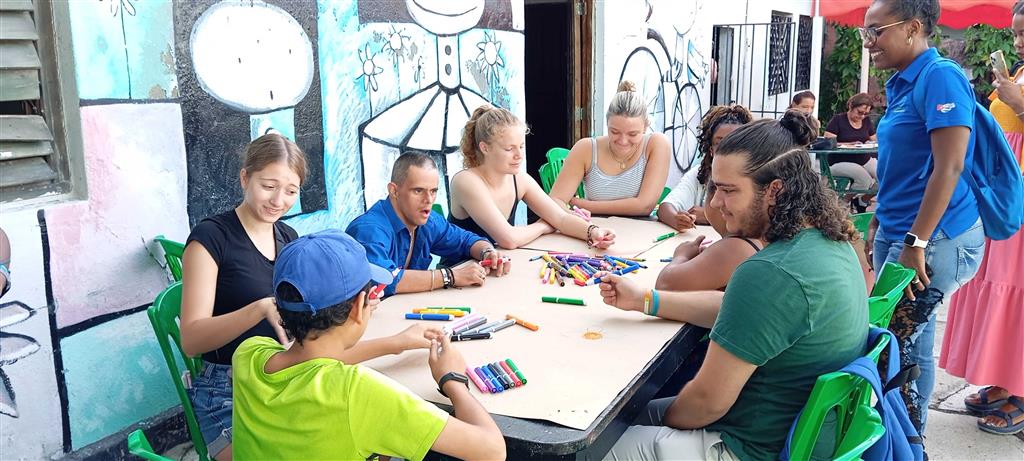
Yadira Herrera Hernandez, Resident Director of Civitas GES in Cuba, explained to Prensa Latina that since approximately 2014, they have been dedicated to building bridges between cultures and nations through education and the creation of alliances between Cuban universities and American schools, to provide an international experience for foreign teachers and students.
The visitors spoke with children with Down syndrome and special education needs, and artists from the Cienfuegos Graphic Society Workshop, to learn about their experiences and the reality of these children’s integration into the Cuban health and education system.
“It’s no secret that Cuba respects community, health, the environment, and art, so the greatest benefit is that our American students can come and learn about this concept of holistic health, experience it, interact with it, question it, learn from it, and then use it to enrich their studies and their professional future,” Professor Idris Robinson told Prensa Latina.
During the meeting, the Cuban Friendship Institute presented a donation of paints, brushes, and other artistic materials, donated by members of the Jose Marti Cuba-Turkiye Friendship Association, who recently visited Cuba.
“The US government has made cultural or academic exchange trips like this one difficult, but I’ve learned the concept of resilience over my years working in Cuba. So we try to persist, prioritize education, cultural exchange, and hope that will allow us to continue bringing students. So we adjust, but we persist,” Dr. Robinson stated.
“There are many similar projects in the United States, especially in cities like Philadelphia, that involve minority, vulnerable, or Down syndrome communities. But they are not integrated into broader community efforts, they are not part of public-private partnerships, they are not part of universities, the local community, or grassroots organizations,” he concluded.
jdt/arc/sbd