








Thus, the National Electoral Council (CNE), which had scheduled a special session for 08:00 hours (local time) this Saturday, could not directly initiate the consultative process requested by the president, without going through the filter of the highest court, as the current regulation for such cases establishes.
The precautionary measures are provisional and demonstrate the commitment to ensuring that any proposed constitutional reform or change follows the procedures the Supreme Court establishes, the Court stated after publishing its ruling.
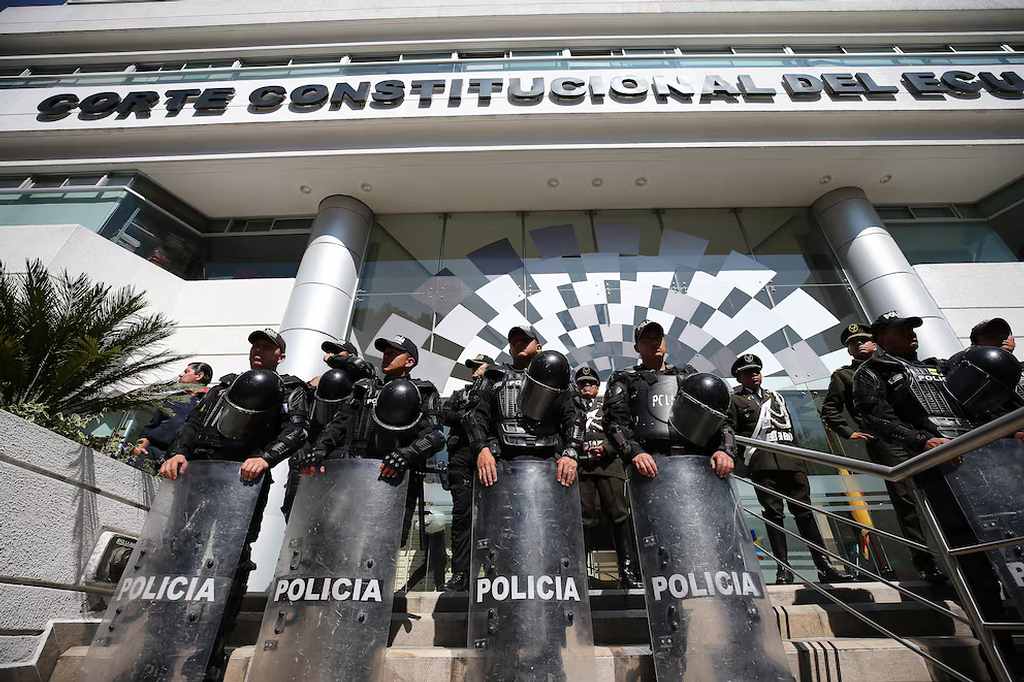
The ruling was issued almost at midnight this Saturday, after the court’s headquarters in Quito was cleared by the National Police when the judges were discussing the matter in question, citing an alleged bomb threat that turned out to be a false alarm.
The institution affirmed that its decision to suspend Noboa’s decree provisionally was made “in strict compliance with the Constitution and the law, aimed at preventing irreversible effects that jeopardize democracy, the Rule of Law, and the participatory rights of all Ecuadorians.”
Local authorities, politicians, and legal experts questioned the president’s decision to ask the CNE directly to initiate the consultative process to decide on a comprehensive reform of the Constitution without prior analysis by the Court.
abo/iff/mem/avr