








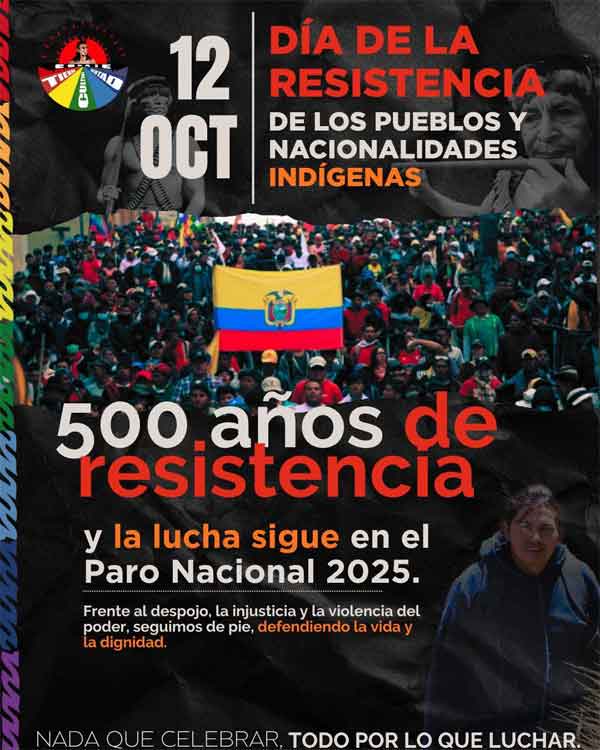
The organization called on people, communities, students, and social sectors to participate in a peaceful march in Quito and other cities “for life, dignity, and democracy,” and in rejection of the neoliberal model, the rising cost of fuel, and the social crisis that, they claim, affects Ecuadorian families.
In its statement, the movement demanded the repeal of Decree 126, which eliminated the diesel subsidy and sparked the current wave of protests, the release of those detained, justice for the injured and deceased, and full reparations for the victims of repression.
The National Indigenous People’s Confederation (CONAIE) also denounced the militarization of Quito, where approximately 7,000 troops are deployed, in addition to the “blockade of public transportation” and “tactical war movements” against mobilized groups.
The statement warns of “the presence of infiltrators, false flag actions, and false positives” that, in its view, seek to generate chaos and justify the use of force.
The indigenous movement urged its members to maintain the peaceful nature of today’s mobilization and called on the international community and human rights organizations to monitor possible acts of repression or rights violations during the marches.
The march this Sunday, October 12, known here as the Day of Interculturality and Plurinationality, will depart from the Villaflora roundabout in southern Quito to El Arbolito Park in the city center.
jdt/rgh/avr