








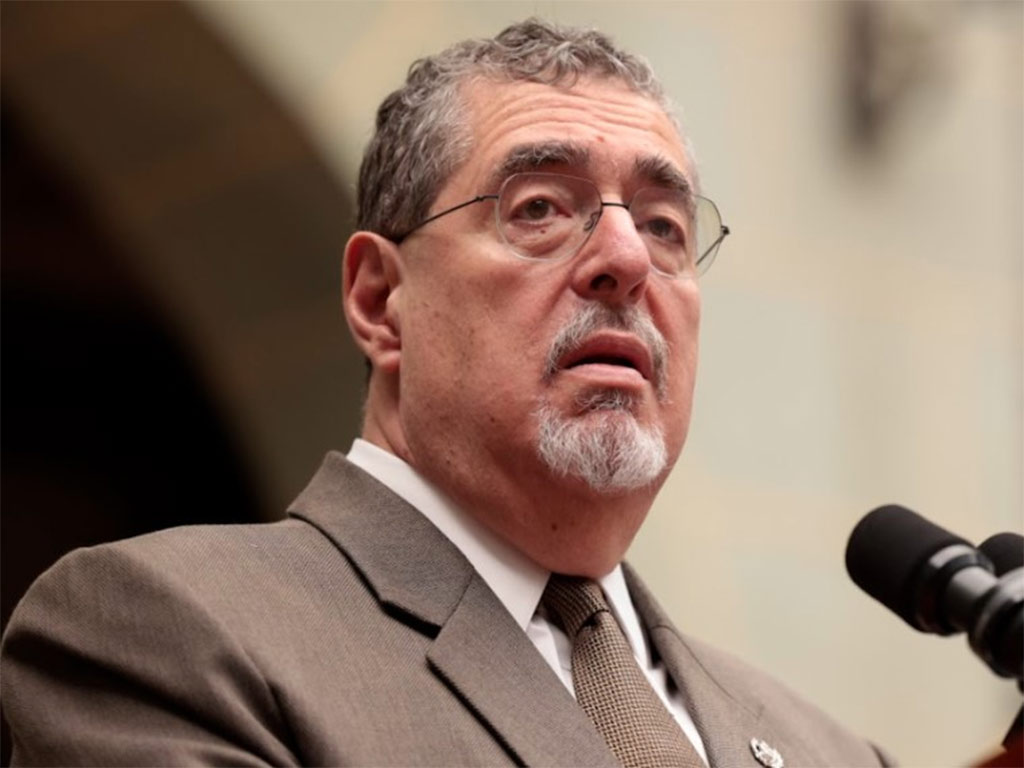
“It has been fundamental in supporting the population, but we are pleased to see that the country now has the capacity to fulfill these commitments,” the president explained at a press conference.
On the withdrawal of the Cuban doctors, the head of state elaborated that “in all the places where there has been a Cuban doctor, we are placing a Guatemalan doctor, as is appropriate,” Arevalo said.
“The contracts signed with each doctor are ending, and then the position is given to a Guatemalan doctor,” the president emphasized, in the context of the decision announced last January, which entails the phased end of the current bilateral agreement.
The president emphasized that capacity has been developed throughout this period, addressing concerns about the gradual withdrawal of Cuban doctors.
Previously, expressions of appreciation and gratitude arose from the grassroots level for the compassionate care provided after the devastation caused by Hurricane Mitch.
At an event held at the Jose Marti Cultural Association in Guatemala city, the contribution of the Cuban doctors was recognized, as the Cuban Medical Brigade (BMC) has not only provided relief to thousands of people over the years, but has also been present during emergencies when the country has needed it.
jdt/ool/znc
DOMINICAN REPUBLIC-CUBA
Dominican leader Manuel Salazar calls for solidarity with Cuba
Santo Domingo, June 10 (Prensa Latina) Dominican leftist political leader Manuel Salazar stated that Cuba is facing the highest levels of economic aggression and military threat in recent decades, and therefore called for increased international solidarity with the island.
In a statement published by the newspaper Acento, the member of the Political Bureau of the Communist Party of Labor (PCT) maintained that “never before has economic aggression and military threat against Cuba reached such dimensions” and considered the Caribbean nation a “vital link” in the fight against imperialism in Latin America.
Salazar argued that, before the triumph of the Revolution in 1959, the island was “the weakest link in the chain of imperialist domination” in the region, as it was under the dictatorship of Fulgencio Batista and subject to the interests of US capital and organized crime.
Therefore, Salazar affirmed, the response was the popular and anti-imperialist revolution that triumphed on January 1, 1959, under the guidance of the historical leader of the Cuban Revolution, Fidel Castro.
Salazar pointed out that the victory made Cuba a model for other Latin American nations seeking to end foreign domination and oligarchic power structures.
“North American imperialism had to eliminate that model; it could not allow its influence to spread to other nations. That is why it imposed an economic blockade to suffocate the island and designed policies to prevent its replication in other territories,” he denounced.
jdt/oda/mpv