








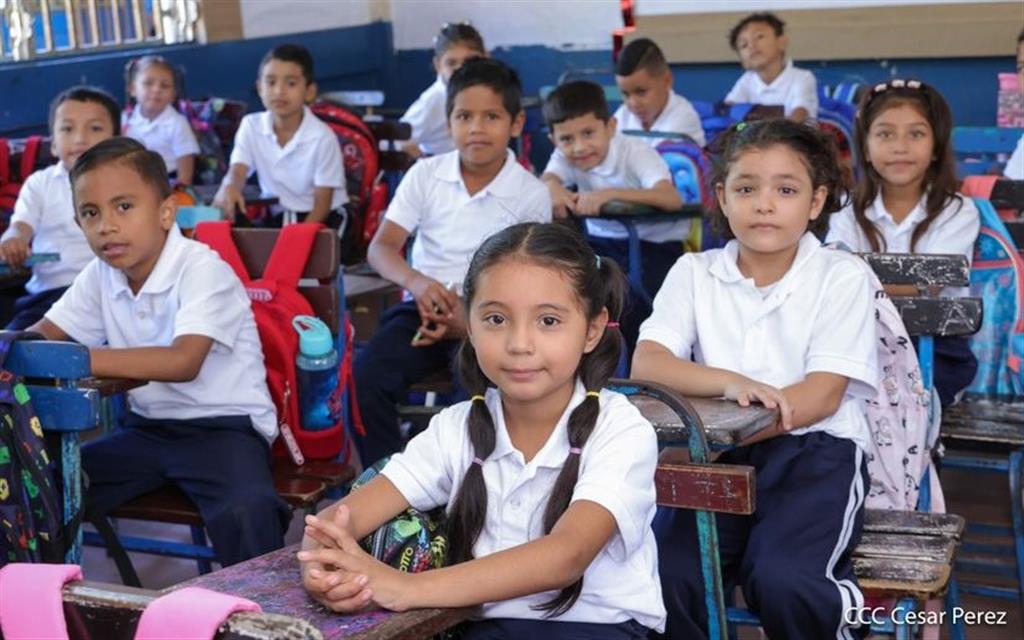
According to the publication, since 2007, when the executive branch led by President Daniel Ortega returned to power, education has been consolidated there as a pillar of human development, with free access at all levels, from preschool to university, including technical and technological programs.
The note explains that Nicaragua has democratic access to all sectors, especially for those that had been marginalized until 1979, and between 1990 and 2006, when the country was run by neoliberal governments.
It highlighted the development of school infrastructure and noted that this year Nicaragua has nearly 10,000 schools spread all throughout the country, which represents a significant increase equal to the few urban educational centers of 46 years ago.
In addition, teacher training programs have been implemented, reducing empiricism and improving the quality of teaching.
Teachers have seen salary increases of nearly 500%, with ongoing training through pedagogical meetings and conferences.
According to this information, the education system in this Central American nation promotes revolutionary values, critical awareness, and scientific skills, aligning itself with social and economic development.
jdt/arm/mem/ybv