








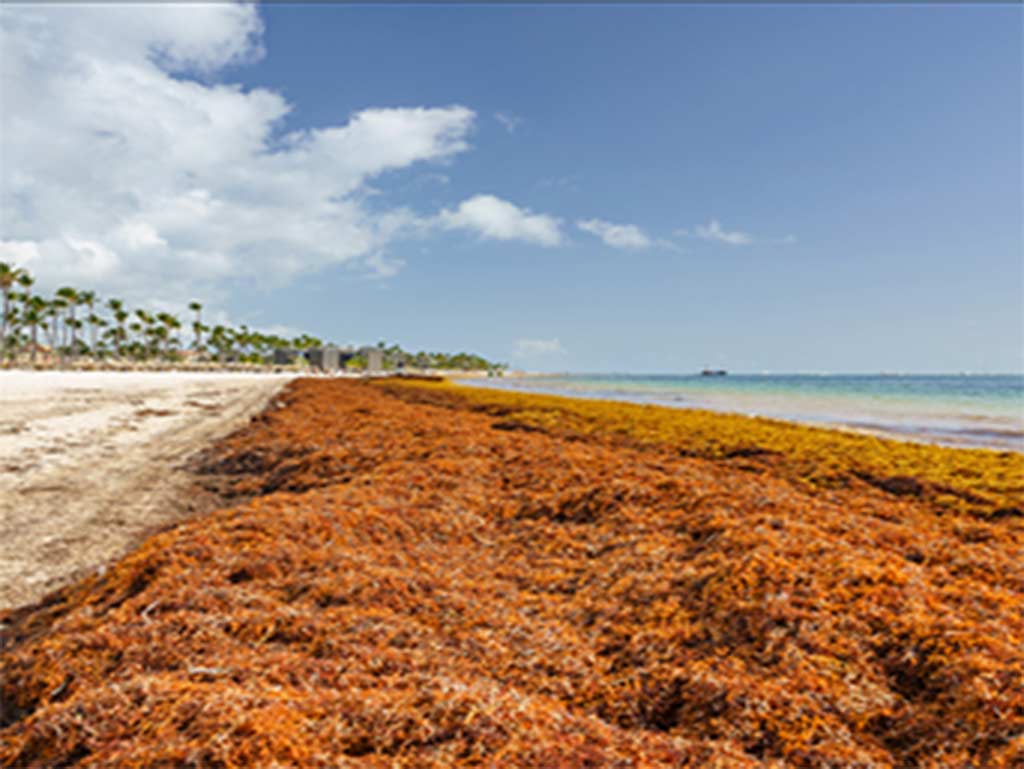
Specialists and other institutions are concerned about the environmental, economic, and public health impact of this phenomenon, according to caribbeannewsdigital.
The massive accumulation of this brown algae releases toxic gases such as hydrogen sulfide, which cause unpleasant odors, affecting air quality, and killing marine fauna, the source points out.
According to ecologist Brian Lapointe, the recent extreme rains in the Amazon basin generated a massive “discharge” of phosphorus and nitrogen into the ocean, fertilizing the sea and driving the growth of sargassum.
Since 2011, researchers have monitored this phenomenon as part of the so-called Great Atlantic Sargassum Belt, an oceanic strip where these algae grow.
A report from the University of South Florida estimates that nearly 38 million metric tons of sargassum have been recorded, a 58 percent increase over the previous record set in 2022.
Collection entails significant expenses for local authorities and direct impact on tourism, one of the main sources of income in the region.
jrr/jdt/mem/dla