








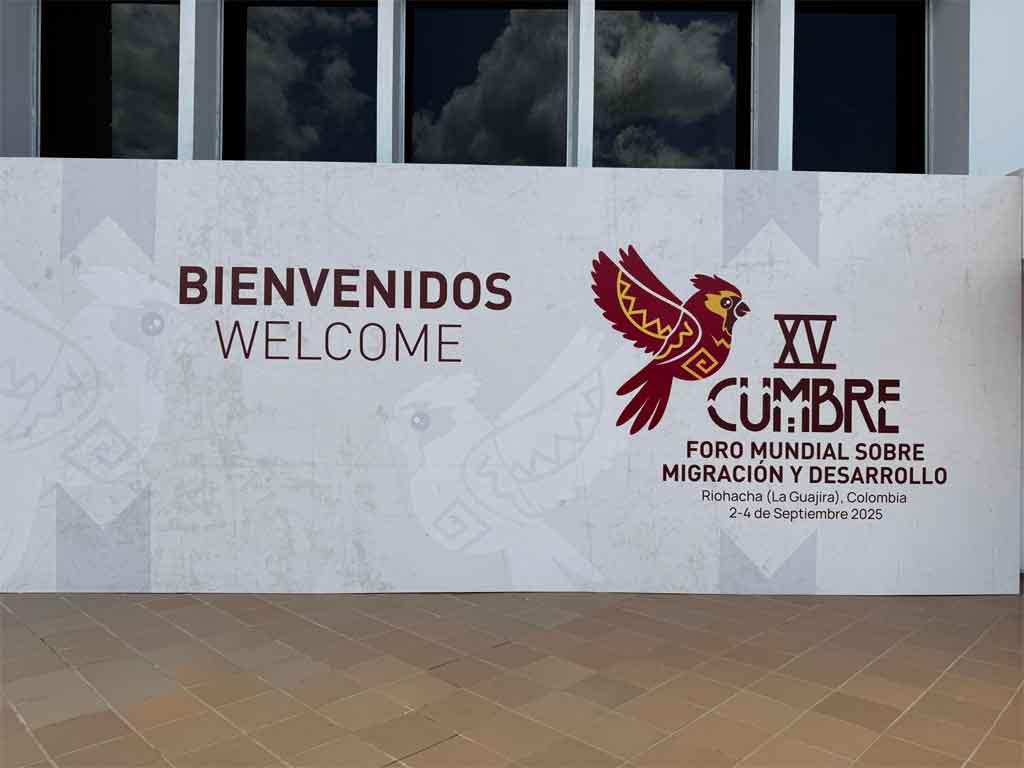
During the day, a total of 23 events took place at the Héctor Salah Zuleta Library with the presence of nearly 1,000 delegates from 40 countries, organizations of the UN system, experts and civil society.
According to the Ministry of Foreign Affairs, during the panel “Experience of women migrants in transit and challenges for their integration in destination countries”, participants made recommendations aimed at integrating a gender perspective into migration agendas.
There was also the meeting “Human mobility promoted by persecution and lack of guarantees to sexual and gender diversity”, where we reflected on LGBTIQ+ migration as an act of survival, resistance and reaffirmation of identities.
On the other hand, during the parallel event “Depolarizing narratives about migration with data-based policies” was presented the report of the Club de Madrid that highlights the positive impact of migration on the economy and social development.
The same study highlighted how scientific and reliable data can overcome misinformation and promote action-oriented policies for people who have chosen to live in a country other than their own.
Also in the panel “Building integration routes: challenges and opportunities for the Venezuelan population in Latin America” it was stressed that, at the end of 2024, more than 123 million people had been forcibly displaced.
The workshop “Climate change: adaptive solutions through international partnerships and labour mobility” highlighted the crucial role of human mobility in addressing global challenges such as green transition.
Initiatives to recognise labour mobility as a driver of prosperity were presented.
abo/rc/ifs