







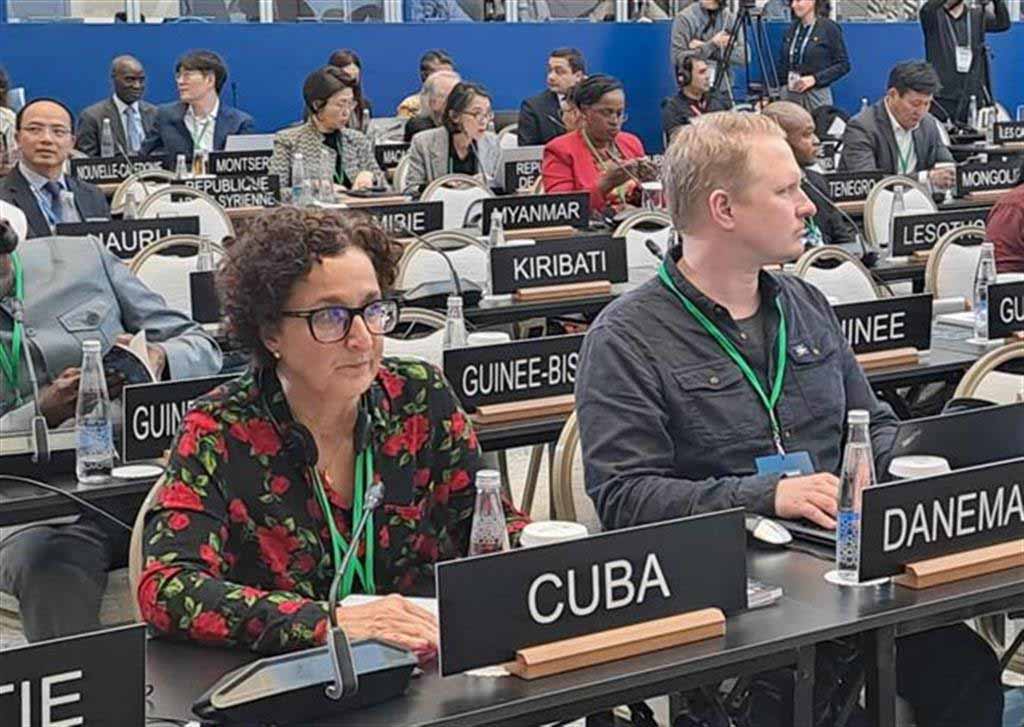
Dulce Buergo, president of the Cuban National Commission for UNESCO (CNCU), who is representing the Caribbean nation at the meeting, told the news agency that Havana reaffirmed the country’s commitment to multilateralism, the defense of peace, and international law at a time of complex challenges for humanity.
The meeting of national commissions is part of the official program of activities of the 43rd UNESCO General Conference, being held in the historic Central Asian city until November 13.
Buergo addressed the negative impact of the economic, commercial, and financial blockade imposed by the United States against Cuba, within the scope of the Organization’s mandate, a situation exacerbated by the country’s inclusion in Washington’s State Sponsors of Terrorism (SSOT) list.
Despite this, she noted, Cuba is working in several areas of interest, such as cultural and creative industries, heritage, networks of UNESCO-associated schools and chairs, Geoparks and Biosphere Reserves, and artificial intelligence (AI), among others, in cooperation with the international organization, all of which contribute to the country’s development.
The meeting also served to denounce the genocide against Palestine and reaffirm Cuba’s historic solidarity with that brotherly people, their right to peace, and their right to the establishment of a sovereign and independent state, with East Jerusalem as its capital.
abo/iff/lam/gfa