








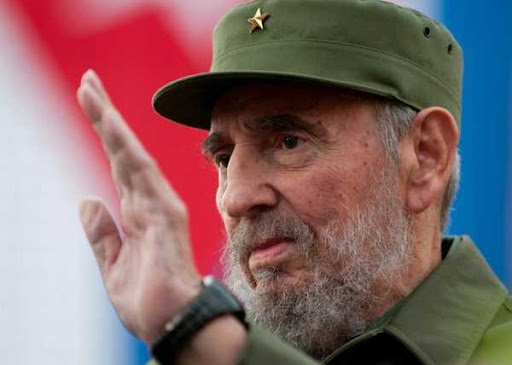
Fidel’s gesture thus showed solidarity with the crowd that welcomed him, for the first time, in Bolivia, on August 5, 1993, in a context marked by national anger over FIFA’s sanction on a national team player.
According to journalist Ovidio Cabrera, in the book “Privilegiados Del Tiempo” (Privileged of Time), which was launched in this capital recently on Fidel Castro’s 99th birthday, this August 13, the leader of the Cuban Revolution was aware of the reason why, among the welcoming cheers, his supporters also chanted: “Coca is not cocaine.”
A few days earlier, the Bolivian national team had defeated Brazil 2-0 in La Paz, a historic victory later marred by a statement from the world sports organization announcing that number 4, Miguel Angel Rimba Alvis, had tested positive for cocaine in a doping control test.
It was the afternoon of August 5, 1993, when the Cuban head of State, invited by newly elected Bolivian President Gonzalo Sanchez, came out onto the Hotel balcony, raised a cup of coca leaf tea, and drank it in full view of everyone, the reporter asserts.
When the crowd saw Fidel Castro drinking coca leaf tea, they multiplied their shouts and chants and never tired of uttering his name, recalls the journalist, who was the creator and founder of the Cuban Television news services.
It was a show of solidarity with the Bolivian people and against the move they wanted to perform against the Andean nation in the soccer game.
This was once again an unprecedented event in the history of the peoples of Bolivia and Cuba, Cabrera, who also founded the multi-state TeleSUR channel, noted.
jdt/iff/npg/lld